




Last Updated:
April 27th, 2026
Amitriptyline was originally developed as an antidepressant, but it’s now mostly prescribed for chronic pain, nerve pain, migraines, and sleep problems. Over 15 million prescriptions are written for it each year in England alone, and most of those are for the lowest pain-relief dose.
Most people taking amitriptyline will have been told to be careful with alcohol. That is because amitriptyline already causes drowsiness, which alcohol can intensify. But alcohol also changes how your liver processes amitriptyline, and that can lead to far more dangerous issues, particularly with your heart.
How amitriptyline works
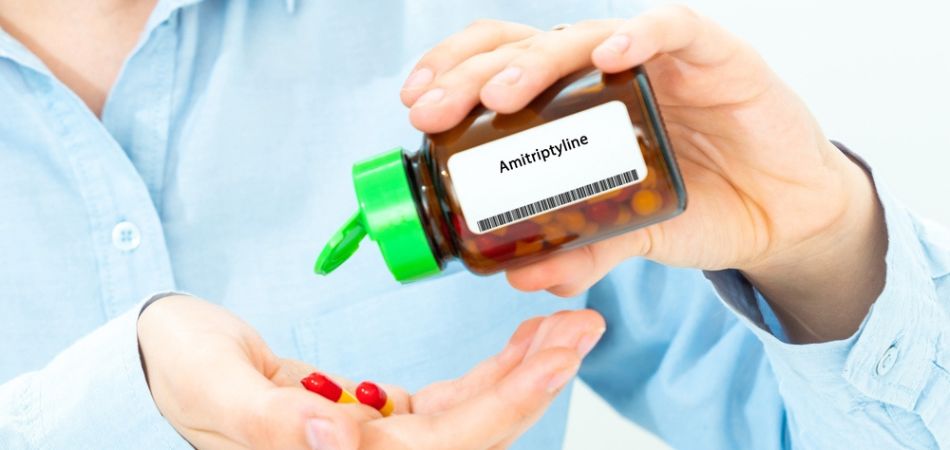
Amitriptyline belongs to an older class of antidepressants called tricyclics. It works by blocking the reuptake of certain brain chemicals, which helps with both mood and pain. But amitriptyline also affects other systems in your body, including your heart rhythm and alertness.
One of the main side effects of amitriptyline is sedation, so most doctors suggest taking it in the evening to help you sleep rather than interfering with your day. This is useful if pain or anxiety is keeping you awake. However, it also means that anything else causing sedation, like alcohol, can make the effects far stronger.
What happens when you mix amitriptyline and alcohol
First, alcohol slows down your liver’s ability to process amitriptyline. Your liver acts as a filter, controlling how much amitriptyline gets into your bloodstream. Research published in the European Journal of Clinical Pharmacology found that alcohol can increase free amitriptyline concentrations in your blood by over 200% during the absorption phase. That means a normal dose of amitriptyline can suddenly behave like a much larger dose, increasing all the risks that come with that.
Second, both amitriptyline and alcohol cause sedation. Alcohol is a depressant, and amitriptyline has strong sedative effects of its own. When you mix them, they can greatly amplify each other’s effects. This can leave you feeling far more impaired than you would from either substance alone, with worse coordination, slower reactions, slurred speech, and gaps in your memory from blackouts.
The more alcohol you drink, the more amitriptyline gets into your blood, and the more dangerous these effects become.
Potentially fatal heart problems
Drowsiness and blackouts can be uncomfortable and even scary, but the biggest danger is what amitriptyline and alcohol can do to your heart.
Amitriptyline affects the electrical signals that control your heartbeat. At normal doses, the effects are relatively minor, but at higher levels, amitriptyline can cause arrhythmias, where your heart beats irregularly or too fast. This is the main cause of death with an overdose involving amitriptyline. The heart’s electrical system becomes unstable, and in severe cases, it can stop altogether.
Alcohol makes this worse in two ways. First, by increasing amitriptyline levels in your blood, it pushes you closer to the toxic range. And second, alcohol itself affects heart rhythm, particularly in people who drink heavily or who already have existing heart problems. The combination means your heart is being affected by both at once.
Signs that something is wrong
If you’ve taken amitriptyline and alcohol together and things are going wrong, the signs include:
- Severe drowsiness
- Confusion or disorientation
- Slurred speech that is more slurred than alcohol would normally do
- A racing or irregular heartbeat
- Dizziness when you stand up
- Blurred vision
- Difficulty passing urine
Cardiac symptoms are particularly important and should be treated as an emergency. Call 999 if you see these symptoms in yourself or someone else, and tell the paramedics exactly what was taken:
- A pounding or fluttering heart
- Fluttering or skipped heartbeats
- Feeling faint
- Chest pain
- Collapse
- Unconsciousness
Risk factors for dangerous complications
Some people are more vulnerable to harm from mixing amitriptyline and alcohol than others.
People who have just started taking amitriptyline or recently increased their dose are at higher risk because their bodies haven’t adjusted yet. Adding alcohol before understanding your response to amitriptyline significantly increases your risks.
Most people taking amitriptyline for pain are on 10mg to 50mg. People on higher doses for depression or severe pain have less margin for error before reaching toxic levels.
Heavy drinkers also face increased risks of harm. The more alcohol in your system, the more it interferes with how your body handles amitriptyline, and the stronger the combined sedation.
Heavy drinking also puts extra strain on your heart and liver. People with heart problems are at particular risk because amitriptyline’s cardiac effects are more dangerous when arrhythmias or heart disease are already present.
Older adults process both alcohol and medications more slowly, which means both stay in the system longer and have stronger effects. This can create a risk of falls and serious heart problems.
Amitriptyline and overdose
Between 1987 and 1992, over 80% of deaths from antidepressant overdose in the UK involved just two drugs, amitriptyline and dothiepin. That is one reason tricyclic antidepressants are no longer the first-line treatment for depression. The difference between a helpful dose and a harmful one is very small, and a prescription meant for a few weeks can be lethal if taken all at once.
As explained above, alcohol makes the effects more powerful, which increases the risk of an accidental overdose. Alcohol also impairs judgement, so people who have been drinking are more likely to misjudge doses or make impulsive decisions.
If you’re taking amitriptyline and you’ve been having thoughts of suicide or self-harm, please speak to someone. Your GP can help, or you can contact Samaritans or call them on 116 123. If you’re worried about access to your medication, your doctor can prescribe smaller quantities at a time.
Is any amount of alcohol safe?
The NHS takes a relatively moderate position on this. Their guidance says you can drink alcohol while taking amitriptyline, but that it may make you feel sleepy, so it’s best to avoid alcohol until you know how the medication affects you.
This is generally true. For most healthy people on a low dose of amitriptyline, an occasional single drink is unlikely to cause a medical emergency.
But the NHS guidance is based on averages, not on your specific situation. It doesn’t account for the interaction that can double or triple amitriptyline levels in your blood, the cardiac risks that increase with dose and pre-existing conditions, or the fact that one drink often leads to several in problem drinkers and those with alcohol dependency.
The safer approach is to avoid alcohol entirely if you’re new to amitriptyline, and until you know how the drug affects you. If you’re on a higher dose, have any heart problems, or take other sedating medications, avoid alcohol altogether. If you’re going to drink at all, keep it minimal, don’t drink alone, and don’t drive.
What to do if you have mixed them
If you’ve taken amitriptyline and had a drink, you don’t need to panic. For most people, a single drink while on a low dose won’t cause immediate harm, but you shouldn’t drink any more. Amitriptyline has a long half-life of around 20 hours, which means it stays in your system for a while. Spacing out any further alcohol gives your liver a chance to process what’s already there.
Watch for the symptoms listed earlier over the next few hours, particularly unusual drowsiness, confusion, or anything to do with your heart. If you feel significantly worse than you’d expect from the amount you’ve drunk, that is a warning sign. If you’re worried, call 111 for advice. If you have severe symptoms, chest pain, or collapse, call 999.
When the problem isn’t the amitriptyline
For some people reading this, the real issue may be that drinking has become a problem in its own right, and amitriptyline is just another complication.
If you are living with alcohol addiction, or your drinking is starting to seriously affect your health, you should tell your prescriber and get professional help. UKAT offers advice and treatment for people who want to change their relationship with alcohol.
If drinking is making it harder to manage your pain, take your medication safely, or look after your mental health, our alcohol detox and rehab programmes can help change and possibly even save your life.
Contact Oasis Runcorn today for a free assessment and to find out what help is available.
(Click here to see works cited)
- Dorian, P., et al. “Amitriptyline and Ethanol: Pharmacokinetic and Pharmacodynamic Interaction.” European Journal of Clinical Pharmacology, vol. 25, no. 3, 1983, pp. 325–31. https://pubmed.ncbi.nlm.nih.gov/6628520/
- Henry, J.A., et al. “Relative Mortality from Overdose of Antidepressants.” BMJ, vol. 310, no. 6974, 1995, pp. 221–24. https://pubmed.ncbi.nlm.nih.gov/7866123/
- NHS. “Common Questions about Amitriptyline for Pain and Migraine.” NHS, 14 Aug. 2023, www.nhs.uk/medicines/amitriptyline-for-pain/common-questions-about-amitriptyline-for-pain-and-migraine/