




Last Updated:
March 24th, 2026
What is diazepam?
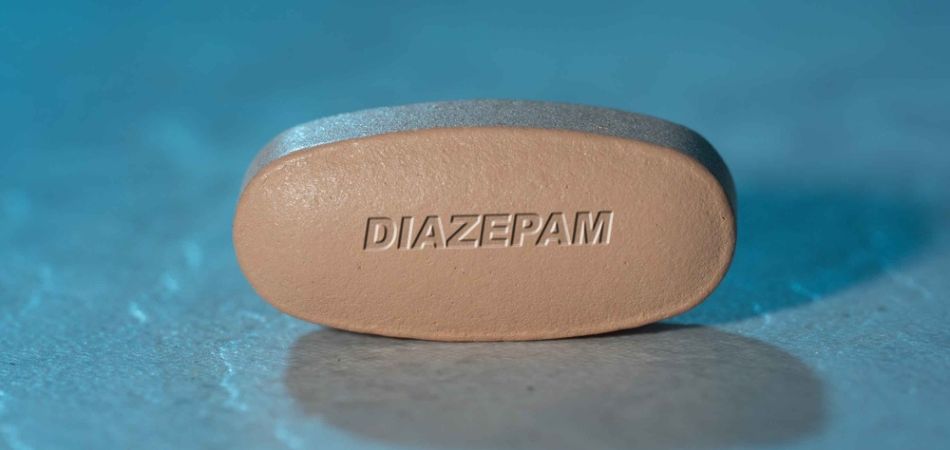
Diazepam belongs to a class of medications called benzodiazepines and is a prescription drug for a range of conditions including anxiety disorders, panic attacks, muscle spasms, seizures, and alcohol withdrawal.
The reason diazepam is effective across all of these uses comes down to how it acts on the brain. It works by enhancing the activity of a neurotransmitter called GABA, which is the brain’s primary inhibitory chemical. GABA slows the brain’s processes by reducing the rate at which nerve cells fire, which produces a calming effect on the central nervous system. Diazepam amplifies this natural process, which is why it’s used to relieve symptoms of anxiety or depression.
That same mechanism is also what makes diazepam potentially habit-forming, largely because it produces calm and sedation reliably. The brain can begin to rely on it rather than regulating itself, which opens the door to forming a potential dependence. This is exactly why diazepam is recommended for short-term use only.
Does alcohol react with diazepam?
Alcohol is also a central nervous system depressant, which means it works on the brain in a broadly similar way to diazepam. When you drink alcohol, it increases GABA activity which produces the familiar feelings of relaxation and reduced inhibition.
When both substances are present at the same time, their effects amplify each other. The combined sedation on the central nervous system becomes significantly greater than either substance would produce on its own. This is sometimes referred to as a synergistic effect, and it is what makes this particular combination so dangerous.
The symptoms that can follow range from uncomfortable to life-threatening, depending on how much of each substance is involved. They can include:
- Extreme drowsiness or sedation
- Impaired coordination and balance
- Slurred speech
- Significant memory impairment
- Confusion or disorientation
- Dangerously slowed breathing
- Loss of consciousness
- In severe cases, respiratory failure
Because diazepam is already suppressing the central nervous system, even moderate drinking can push that suppression further than the body can safely manage.
What should I do if I’ve mixed alcohol and diazepam?
If you’re reading this and have realised you have mixed alcohol and diazepam together, there are some steps to take that are dependent on how much you’ve taken of each drug and when.
Call emergency services without delay if you or someone with you experiences any of the following 4:
- Breathing that becomes very slow or shallow
- Inability to be woken
- Blue or grey colouring around the lips
- Seizures
These are signs of a medical emergency, and if you are in any doubt, call for help rather than waiting to see how things develop.
If this has happened more than once, or if you found it difficult to avoid alcohol while taking diazepam, that is important information too, and something we will come back to shortly.
Why do people still mix diazepam and alcohol?
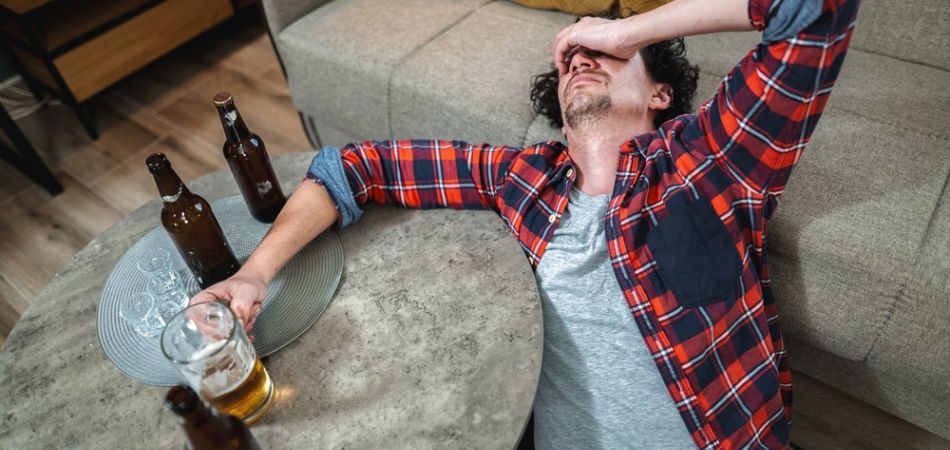
With all these dangerous risks, it might seem strange that someone would even consider mixing these two substances together, but in a lot of cases, it’s unintentional. For example, someone prescribed diazepam for anxiety or a muscle condition might have a glass of wine at dinner without registering the risk. Diazepam is also sometimes prescribed for short courses and then stopped, and people do not always track exactly when the medication has fully cleared their system.
But not every case is accidental. Some people mix diazepam and alcohol because the combination produces something neither substance delivers on its own: a level of sedation deep enough to temporarily silence whatever they are trying not to feel.
For someone in the middle of a mental health crisis, or simply exhausted by chronic stress, that can become the ‘go-to’ fix.
When two substances are used together in this way, each reinforcing the effect of the other, dependence on both can develop in parallel. This is known as polysubstance use, and it matters because stopping one while still using the other rarely works.
Withdrawal from alcohol and withdrawal from benzodiazepines each carry serious physical risks on their own. Managing both at the same time, without medical support, is genuinely dangerous.
It is also worth recognising that both diazepam and alcohol are individually capable of producing strong physical and psychological dependence. When they are used together over time, the hold they develop can be very difficult to break without the right support.
I’m finding it difficult to stop drinking while taking diazepam
If you are struggling to avoid alcohol while taking diazepam, it is worth speaking to an addiction specialist rather than trying to deal with this on your own. Both substances are genuinely addictive, and when they are combined, the picture becomes more complex than either one alone.
Alcohol withdrawal and benzodiazepine withdrawal both carry physical risks, and attempting to manage both at the same time without guidance puts you in a difficult position.
If you’re regularly using Diazepam and alcohol, it’s vital to understand where you stand in your relationship with the two. One of the best ways is to ask yourself some questions that could determine the level of support you need:
- Do you drink alcohol while diazepam is still active in your system?
- Have you felt unusually drowsy after using diazepam and alcohol on the same day?
- Do you rely on alcohol to increase the calming effects of diazepam?
- Have you struggled to avoid alcohol while taking diazepam?
- Have you continued mixing alcohol with diazepam despite noticing negative effects?
These aren’t official diagnostic questions, which means you’re not diagnosed with an addiction to either just by answering them. But if you did answer ‘yes’ to one or more, it does mean that it may be time to talk through your situation with a medical professional.
How can UKAT help?
If you, or perhaps even a loved one, has been struggling with the combined use of diazepam and alcohol, now is the time to seek help. Oasis Runcorn offers diverse treatment options for both benzodiazepine addictions and alcohol addictions and we fully understand the pathways that can lead a person to become dependent on both.
If this feels relevant to you, we offer a free and confidential conversation about where you are and what options may be right for you. There is no pressure and no commitment required, just an opportunity to talk through your situation with someone who understands.
Contact Oasis Runcorn today, and a member of our team will be more than happy to provide the details you need.
(Click here to see works cited)
- Dhaliwal, J. S., Rosani, A., & Saadabadi, A. (2023, August 28). Diazepam. National Library of Medicine; StatPearls Publishing. https://www.ncbi.nlm.nih.gov/books/NBK537022/
- Dharavath, R. N., Pina-Leblanc, C., Tang, V. M., Sloan, M. E., Nikolova, Y. S., Pangarov, P., Ruocco, A. C., Shield, K., Voineskos, D., Blumberger, D. M., Boileau, I., Bozinoff, N., Gerretsen, P., Vieira, E., Melamed, O. C., Sibille, E., Quilty, L. C., & Prevot, T. D. (2023). GABAergic signaling in alcohol use disorder and withdrawal: pathological involvement and therapeutic potential. Frontiers in Neural Circuits, 17(17), 1218737. https://doi.org/10.3389/fncir.2023.1218737
- Yechiel, E. (2016). Synergistic Effect – an overview | ScienceDirect Topics. Sciencedirect.com. https://www.sciencedirect.com/topics/engineering/synergistic-effect
- NHS Inform. (n.d.). Benzodiazepines (benzos, diazepam, valium). NHS Inform. https://www.nhsinform.scot/healthy-living/drugs-and-drug-use/common-drugs/benzodiazepines-benzos-diazepam-valium/
- Berman, J. (2023, February 28). Alcohol withdrawal: MedlinePlus Medical Encyclopedia. Medlineplus.gov. https://medlineplus.gov/ency/article/000764.htm
- Reid Finlayson, A. J., Macoubrie, J., Huff, C., Foster, D. E., & Martin, P. R. (2022). Experiences with benzodiazepine use, tapering, and discontinuation: an Internet survey. Therapeutic Advances in Psychopharmacology, 12, 204512532210823. https://doi.org/10.1177/20451253221082386